
technology / 2026-10-16
When a Diagram Can Be Felt: Tactile Computing Opens New Learning Possibilities
An October 15 profile of a blind developer in Puerto Rico shows how multiline braille and tactile graphics can support new tools—while leaving important questions about access and evidence.
A chart is more than a line of words. Its shape and arrangement carry information. For blind learners, making that structure available through touch can change how a lesson is approached. An October 15, 2026, profile from the American Printing House for the Blind offers a concrete example through the work of Puerto Rican developer and educator Jose Manolo Alvarez.
APH describes Alvarez’s work on educational applications for Monarch, a braille and tactile computing device. His projects include a tactile baseball game for mathematics, a map of hurricanes affecting Puerto Rico and an application exploring local birds through tactile images and sound. These are projects described as in development, not a verified announcement that all three are publicly released.
HumanWare’s product documentation explains the underlying capability: a refreshable display arranged in 10 lines of 32 braille cells can present text and tactile graphics on the same surface. It also documents connectivity with JAWS and NVDA screen readers through Terminal Mode. These are manufacturer-described features, not evidence that every document or diagram will be equally accessible.
APH makes the device available through its product channel and provides manuals, demonstration videos, training materials and a structured course. The training resources are an important part of the story. A new tactile surface still needs understandable content and people who know how to use it; hardware availability alone does not establish that a learner has effective access.
The evidence has limits. APH’s profile features one of its contractors, and both APH and HumanWare helped develop the device. Their accounts document features and reported experiences; they are not an independent comparative trial demonstrating improved outcomes for every learner.
For a school or accessibility team, a sensible next step is to review current documentation, confirm the status of needed applications and arrange an individualized assessment or demonstration. Ask how the device fits existing software, learning materials, training and support. No particular price, funding eligibility or local stock availability is established by this article.
The wider possibility is compelling: learners can encounter spatial information through more than one sense and help create the tools themselves. Alvarez’s work makes that possibility concrete without making it universal.
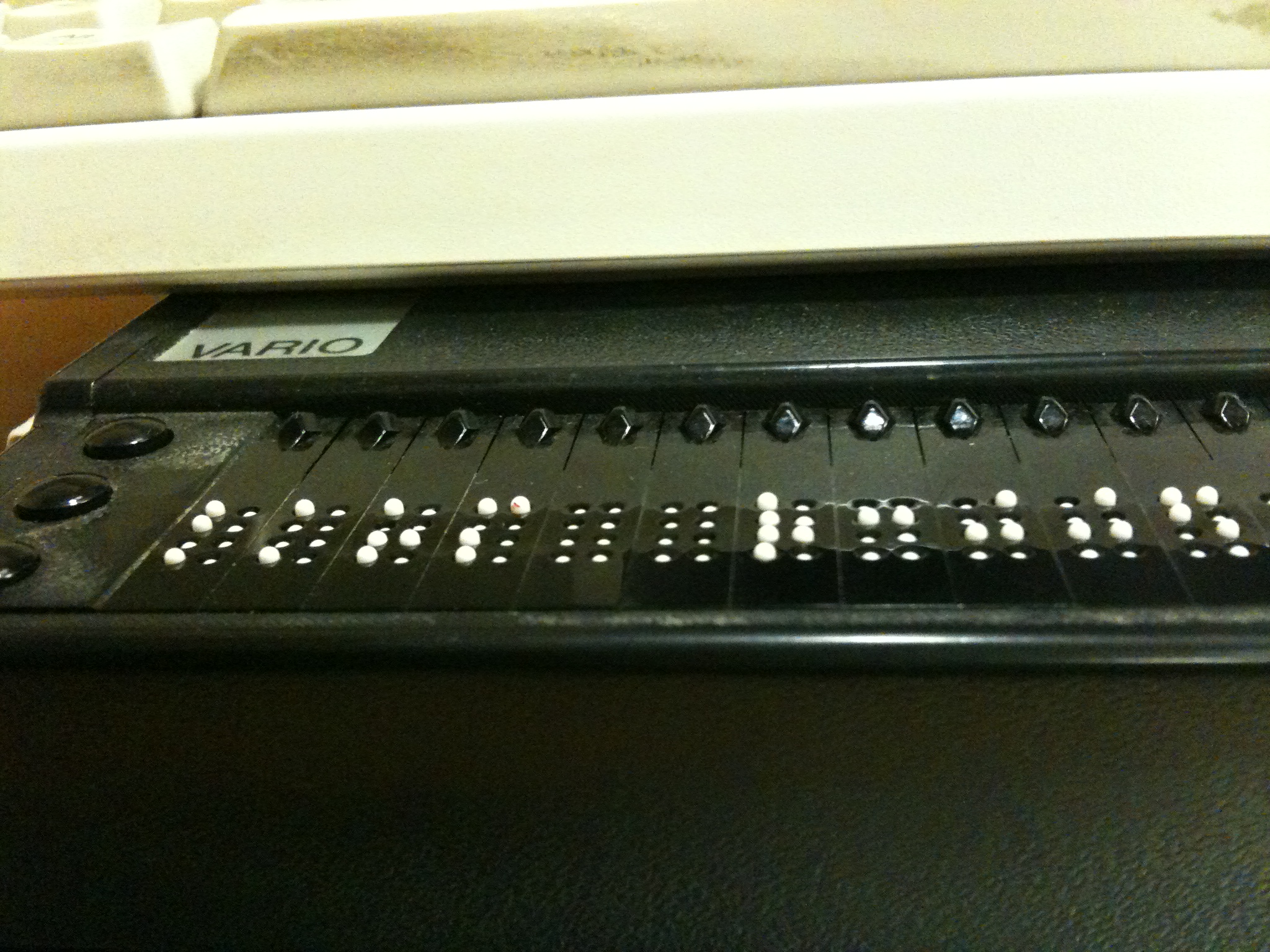
Featured image: a conventional refreshable braille display documented in 2010. It illustrates the broader technology category and is not a photograph of Monarch.
Take action
- Review APH’s device documentation and training ↗
- Check HumanWare’s current technical specifications ↗
Sources
- APH: Manolo Alvarez profile, October 15, 2026 ↗
- HumanWare: Monarch display and connectivity specifications ↗
- APH: Monarch availability, manuals and training resources ↗
Original reporting synthesis by The Raines Foundation, based on the sources above.